Secondary packaging for snacks is no longer only about protecting bags in transit. It shapes retail readiness, labour efficiency, transport utilization, shelf presentation, and in many cases the commercial performance of a brand in store.
Across Europe, packaging formats that reduce in-store handling and strengthen on-shelf visibility are gaining ground, with solutions long used in Scandinavia becoming increasingly relevant in other markets.
In many snack supply chains, products are still packed in traditional RSC cases. In store, this typically means opening the case, removing individual bags, and manually placing them on the shelf.
It is a familiar process, but it consumes time and introduces variability. The final presentation depends on store routines, staffing, and how much attention the category receives during replenishment.
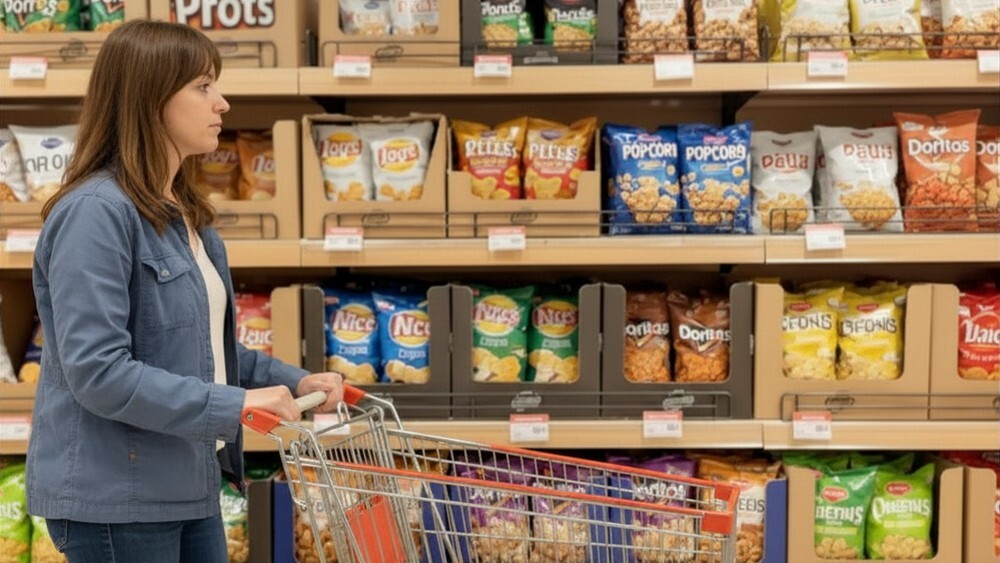
Trays take a different approach. Bags are already arranged in an open format designed for presentation. The tray can be placed directly on shelf or used as a display unit elsewhere in the store. This reduces the number of touches required during replenishment and supports a more consistent, ready-to-sell look from the moment the product is positioned.

Retail presentation engineered into the pack
Shelf-ready trays are designed specifically for efficient retail deployment. They are commonly transported with a lid for stability and protection, then opened in store so the products become immediately visible.
In some designs, the front and top are partially open or easy to remove, allowing the pack to transition quickly from transport mode to display mode.
Shelf economics also matters. Many categories are effectively “sold” by the meter, and brands compete for both space and attention. When the secondary pack supports fast replenishment and a clean display, it contributes directly to better utilization of shelf space and a more predictable brand appearance across stores.
A further advantage is assortment presentation. Trays can be configured to carry mixed variants, enabling several SKUs to share the same shelf footprint in a controlled way. This supports range visibility, simplifies planogram execution, and helps retailers keep the section looking full without excessive manual rearrangement.
Learn more about end-of-line packaging in the snacks industry
Material use and logistics: cost and sustainability drivers
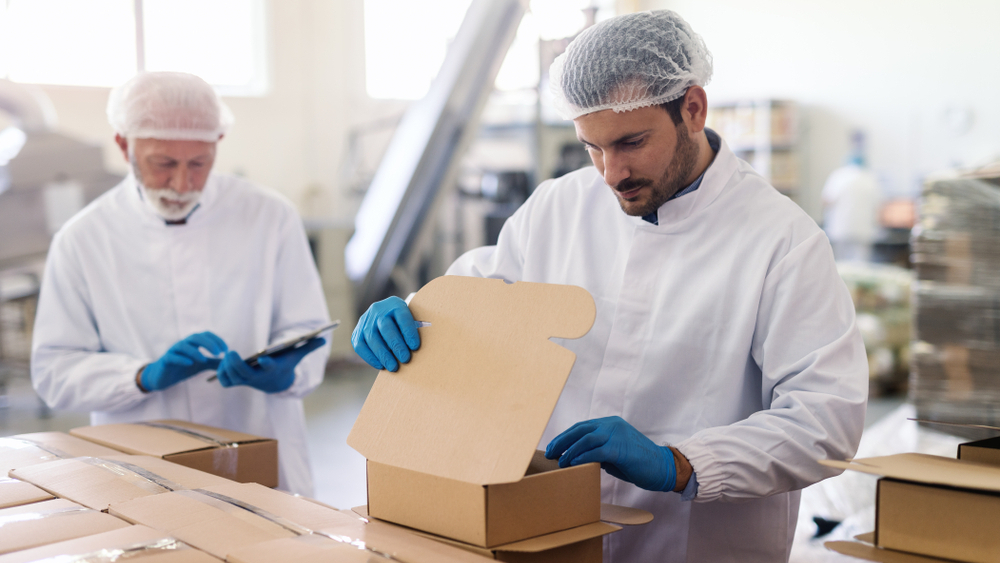
Switching from RSC cases to trays can also change the cost structure of secondary packaging. Trays typically use less corrugated cardboard than closed cases and avoid some of the cost elements associated with fully enclosed designs.
Sealing methods can also shift. Where cases often rely on tape, tray solutions can be designed around hot melt or other closing principles that reduce plastic tape use. That can support sustainability goals while also simplifying packaging operations.
Inbound logistics is another lever. Both RSC cases and trays are typically supplied as flat blanks, but tray formats often require less corrugated board per pack. That reduction in material translates into thinner stacks of blanks, which means more tray blanks can be loaded per pallet height compared with RSC blanks.
In practice, this can improve warehouse density for packaging materials and reduce inbound transport cost per usable pack, especially in high-volume snack environments where packaging consumption is continuous.
Non-shelf solutions: pallet-to-floor merchandising
In many Scandinavian stores, snacks are not always placed into conventional shelving. Floor displays are common, often executed by rolling in a full pallet and placing it directly on the shop floor. In this context, tray-based formats become a practical “non-shelf” solution: the pallet arrives as a ready-made presentation unit, minimizing labour and speeding up deployment.
The largest direct savings from this approach typically sit with the retailer, since the main benefit is reduced in-store handling. For brands and manufacturers, the impact can still be meaningful through improved product visibility, more consistent presentation, and potential uplift in sales driven by easier access and stronger visual presence.
Also read: Rapid Pattern Changes in End-of-line Snack Case Packing
Automation that enables the shift
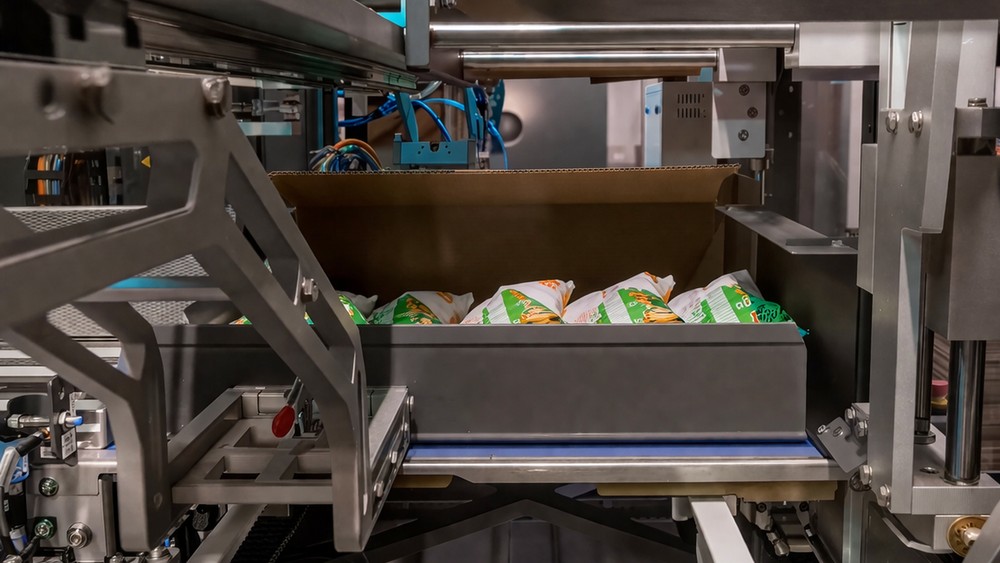
As packaging formats evolve, packing lines often need to evolve with them. Tray solutions can be integrated into end-of-line automation in different ways depending on starting point.
For operations that are building new capacity, integrated concepts bring multiple functions into a single, unified setup. Rather than relying on separate modules for case packing, blank handling, and tray erecting, an integrated architecture can reduce overall footprint and simplify installation and line layout. This becomes increasingly relevant where space is constrained, or where manufacturers want to standardize line design across multiple sites.
For plants with existing case packing equipment, the transition does not have to be all-or-nothing. Tray capability can be added alongside current configurations, allowing production to support both RSC and tray formats. That flexibility can be valuable during market-by-market rollouts, during customer-specific requirements, or when multiple distribution channels operate with different retail expectations.
Useful reading: Replacing Manual Packing with Automated Case Packer
Why trays are becoming more central in snacks
The case for shelf-ready and non-shelf tray solutions is rooted in a simple idea: value shifts upstream when packaging reduces downstream work
• Lower material usage and better inbound logistics support efficiency at the factory
• Faster replenishment and fewer touches support labour efficiency in store
• Better visibility supports commercial performance where shelf competition is intense
For snack manufacturers operating internationally, trays can serve as a strategic secondary packaging format that aligns production efficiency with retail execution. As more markets adopt retail-ready practices that prioritize speed and presentation, tray-based solutions are likely to play an increasingly important role in how brands win attention, protect margins, and keep supply chains flowing smoothly.
If you would like to explore how shelf-ready trays or non-shelf solutions could support your secondary packaging strategy, our specialists are available to share practical insights and discuss what is most relevant for your site and product mix.